
The ELSA SPENCER archives are freely available to historians and researchers, please contact David Dell at
chiriquivillage@yahoo.ca for FREE downloads.
We would recommend first reading the book: SILKEN WINGS
available in print, book form or as an ebook.
In 1901, a 17 year old girl went up in a balloon in England. She had never parachuted before and on her first descent she landed against the wall of a pub and was rendered unconscious. This was no ordinary young woman, as the next day, her 18th birthday she went up again- on her own and this time parachuted and landed safely. She went on to repeat this more than 300 times and became Britain's greatest pioneer parachutist.
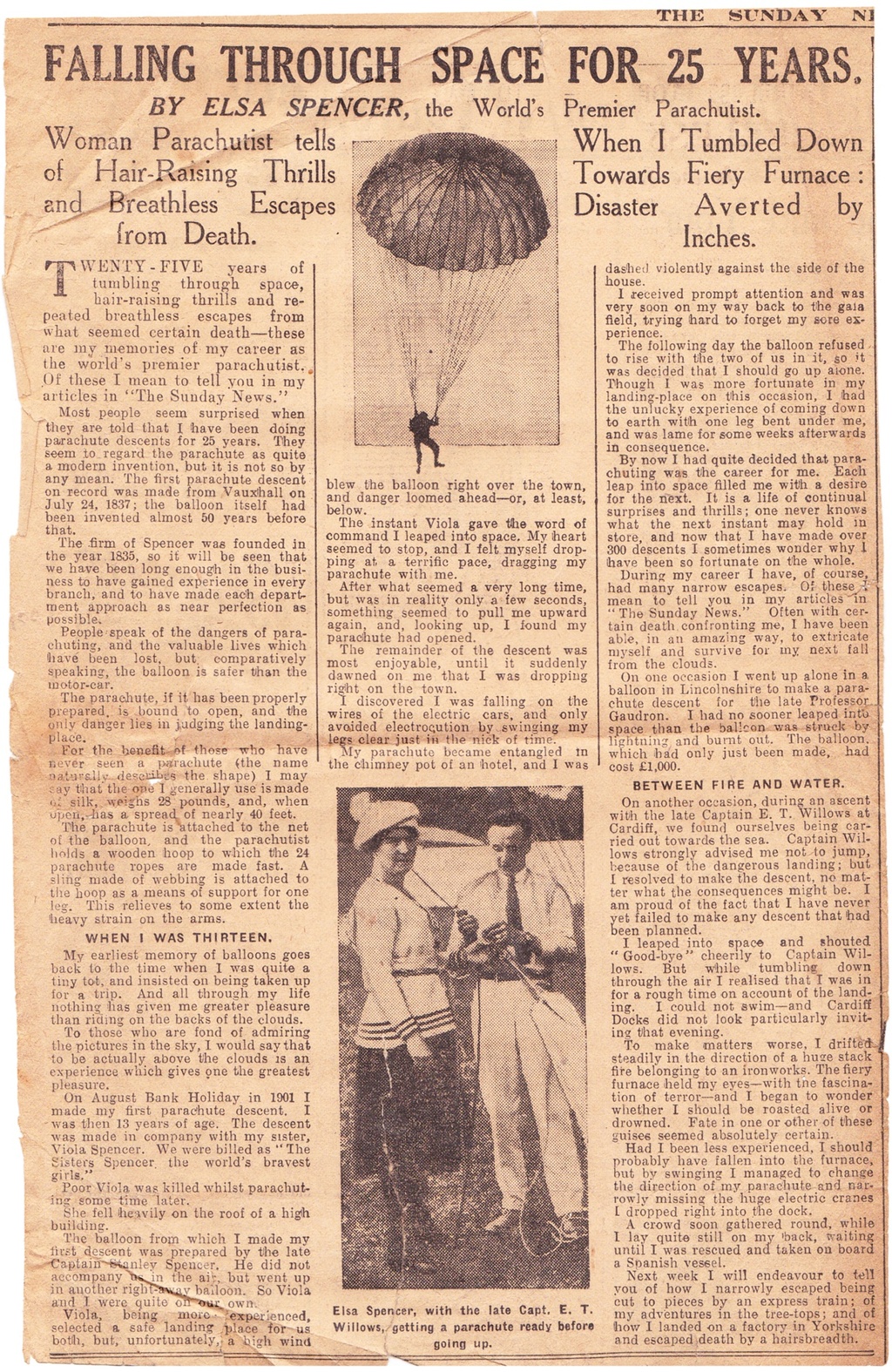
To the right is a copy of the SUNDAY NEWS article from 1926. A full transcript can be found in the book: SILKEN WINGS. Or please request a free download of this image from chiriquivillage@yahoo.ca
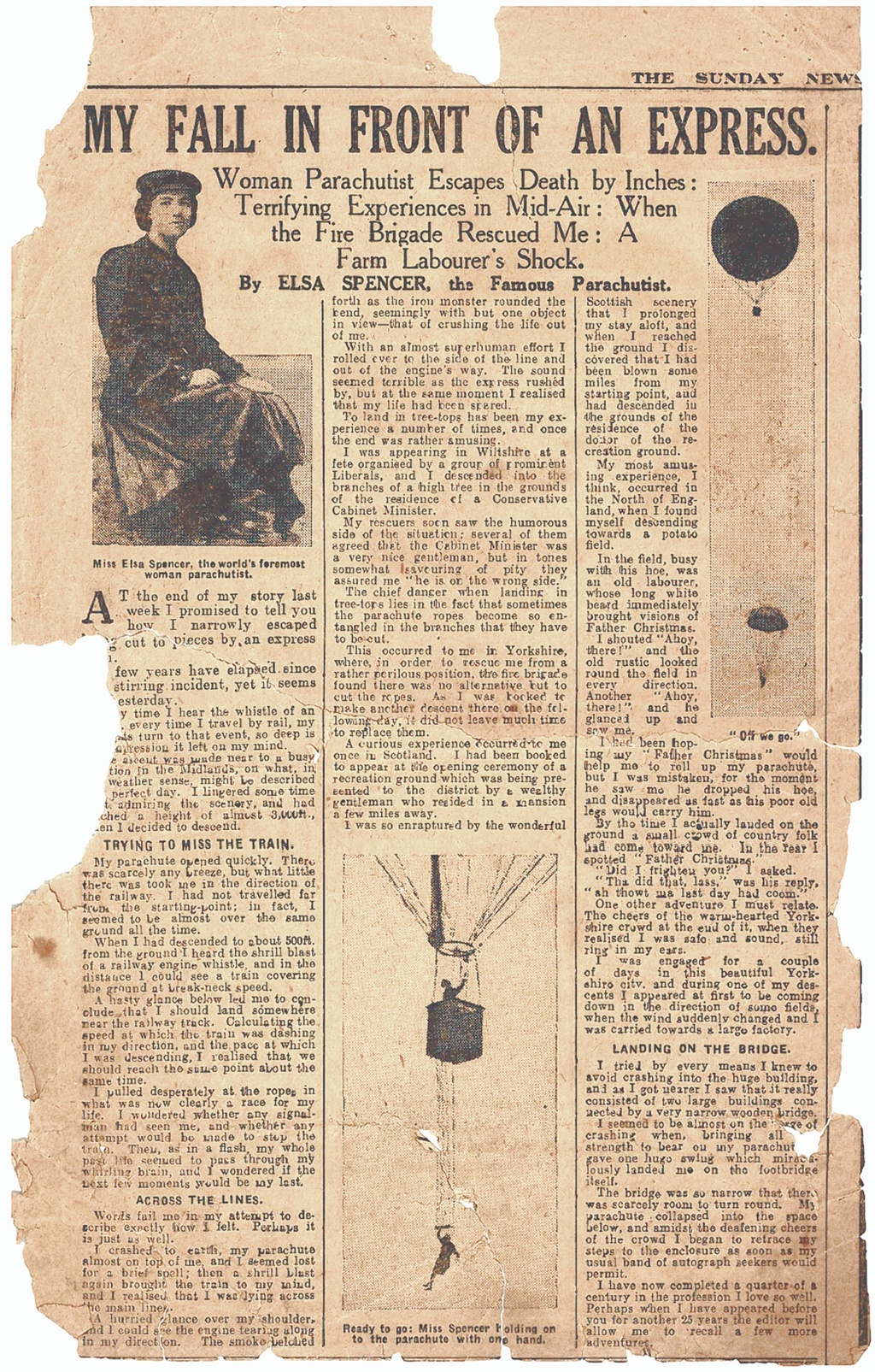
In Elsa's second newspaper article from 1926, she relates a few of her hair raising adventures; one where she lands on a railway track. She judges that she will likely land right infront of the train. She manages to roll off the track in the nick of time. On another occasion she lands in a high tree and is rescued by the fire brigade. In Yorkshire she appears out of the sky and almost causes a poor "Father Christmas Bearded "farmer to have a heart attack. Incredibly as she faces almost certain death on many occasions, she doggedly continues her craft. It should be pointed out that she did not have the luxury of wearing a harness or a reserve parachute she simply descended by hanging on-sometimes with one hand on to a hoop or trapeze bar.
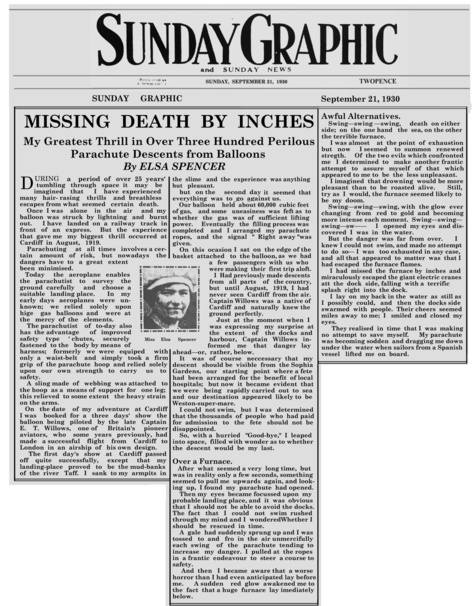
In this final newspaper article from 1930, Elsa basically recaps most of the highlights of her career. She had finished her parachuting back in 1927, and the government banned all parachuting from balloons in 1932.
In 1934, her best friend and staunchest supporter, her husband George dies, possibly from complications that came from his war service in the first World War.
Soon after his death Elsa moves just a few feet away to live with the family of the author of her biography David Dell.
She lived with the Dells throughout the second world war. In 1944, she is sheltering underneath a table during a German air raid, when a bomb hits the Dell's home. The bomb passes 3 feet away from her and buries itself deep in the ground, Miraculously it does not explode.
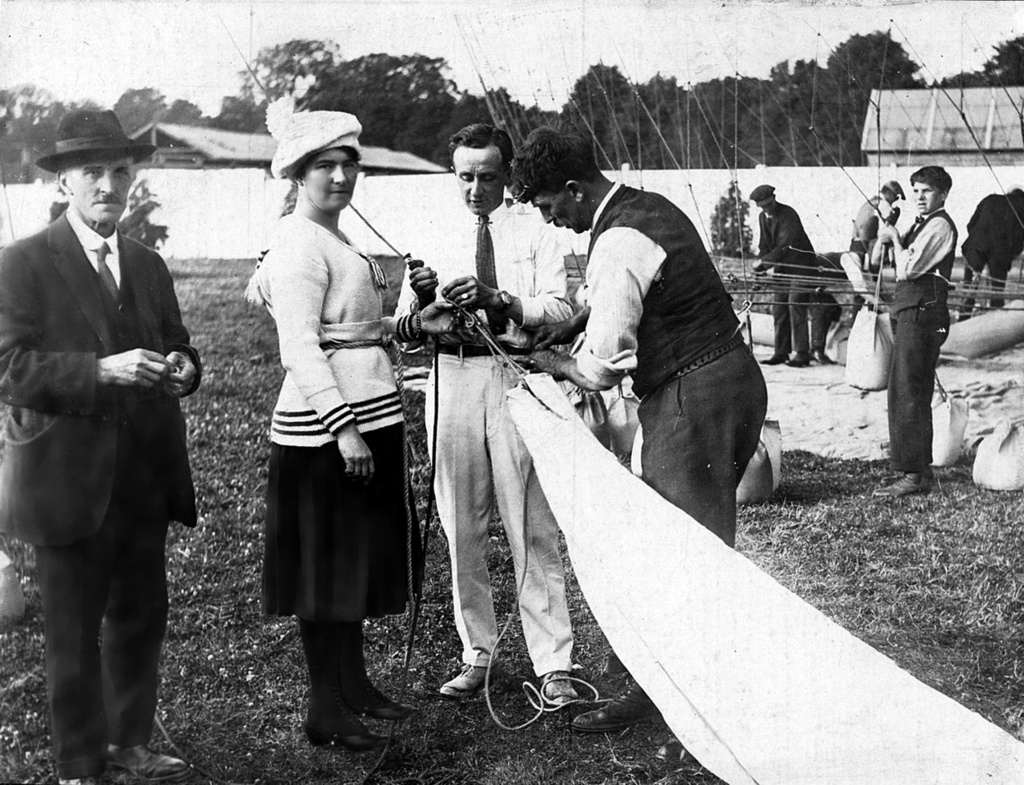
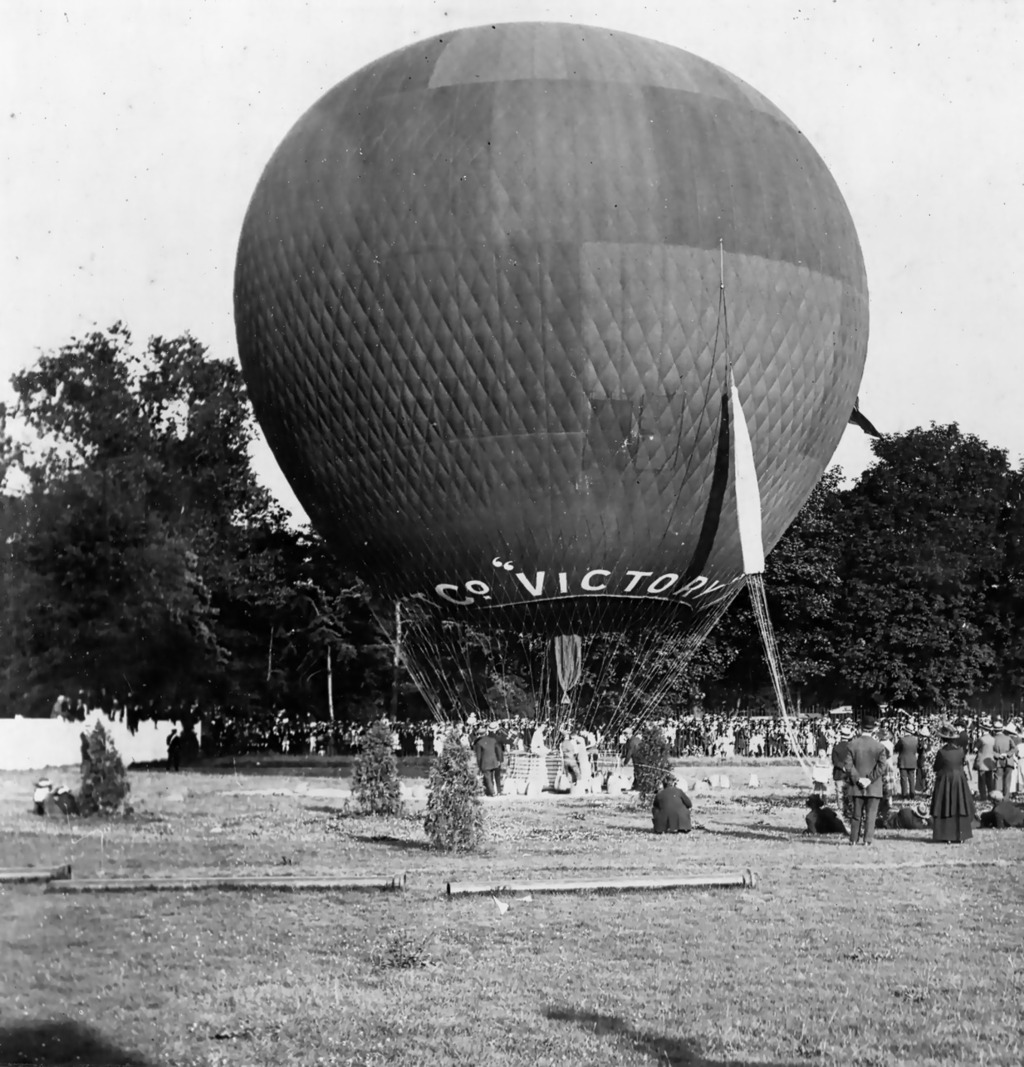
In the two pictures above, both from August 1919. In the first picture we see Elsa looking possibly apprehensive as she prepares to be lifted up with the balloon. The man in the middle is famed balloonist Ernest Thompson Willows. He is described in one book as being the "father of British Airships" the Man with his back towards us is Elsa's Husband George.
In the second picture we see the balloon being prepared for lift off. Note the pipes in the foreground, these were used to bring the coal gas to the balloon.
The balloon, owned by Ernest Willows, is named Victory obviously in honour of the Victory in the recent World War.
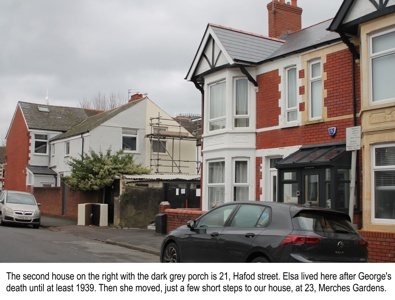
The house with the grey porch below is where Elsa lived with her husband George from 1920. The house on the top left is where Elsa moved after the death of George, sometime around 1934. It was while living here that Elsa Spencer carried out most of her 300 parachute descents. Husband George, only ventured up in a balloon on one occasion. He was a newspaper reporter and photographer - not a daredevil like his wife.
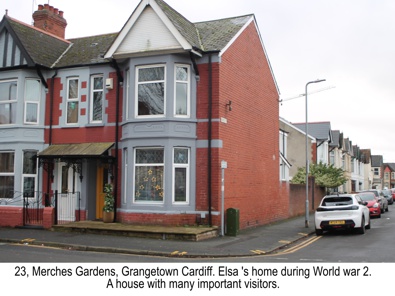
This is the author's home former home, 23 Merches Gardens, Cardiff. This where Elsa lived from 1934 until about 1948. This is the house that was struck by a bomb in early 1944. The unexploded bomb still lies under the kitchen floor.
During the the war the house was used as a boarding home for people in the theatrical profession; including famed actor Peter Ustinov and BBC voice actor Valentine Dyall.
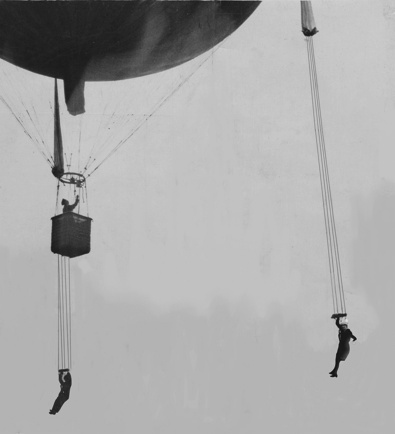
In this undated photo we can see just how precarious it was for the early pioneer parachutists. Elsa is on the right in this picture, as she gaily waves to the crowds with here handkerchief, whilst holding on for dear life to the hoop above her head.
Sometimes the balloon would rise to several thousands of feet in the air before the parachutists would pull a release rope called a "liberator."
You cannot quite see in this picture but there was a short safety rope tied around her waist and this was attached to the hoop above her head.
Another amazing fact from this photo is that Elsa would always parachute in a skirt.
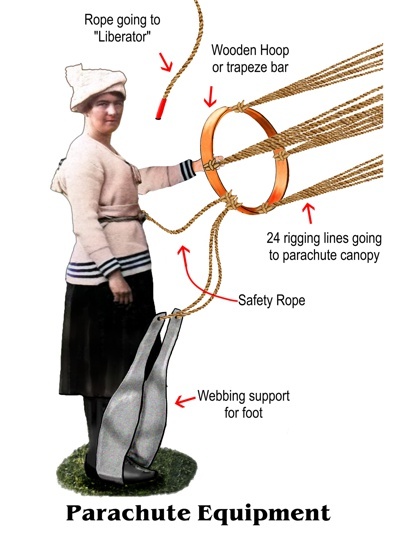
This diagram better illustrates how the early parachutists were attached to the chute and the balloon.
There was a short safety rope tied around the waist- this was the only safety device to prevent the parachutists from being separated from their chute.
A small webbing strap was used to ease the strain on the arms, particularly when the balloon would rise to high altitudes.
There was no means of directing the parachute- basically it would go in whatever direction the wind was blowing.
The rope going to the "liberator" would hopefully deatach the chute from the balloon, in many cases this would fail miserably and the parachutists would be forced to wait until the balloon finally came to earth.
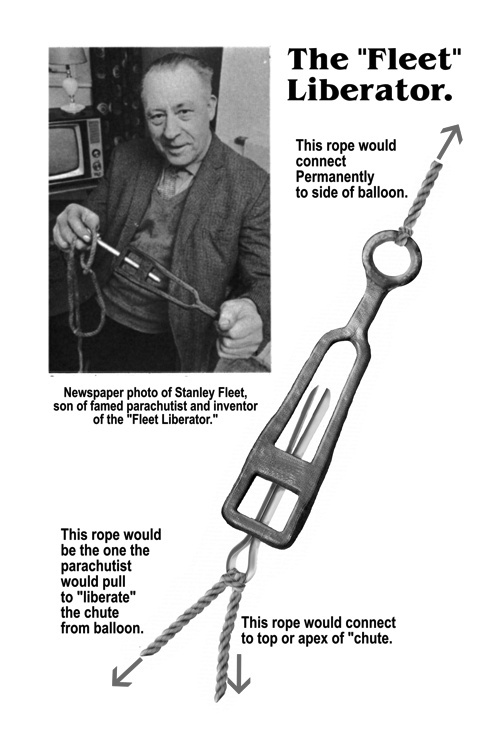
This Fleet Liberator is one of many devices that held the apex of the chute to the balloon. Then when the right altitude was reached the parachutists would pull on the rope and hopefully they would then be free to descend. I say "hopefully" because in many cases this device would jam and fail to release the chute.
This photo on the left of the son of a famous parachutist is the only one I can find actually showing the device. I have tried to establish how the different devices worked and more importantly why they failed to work.
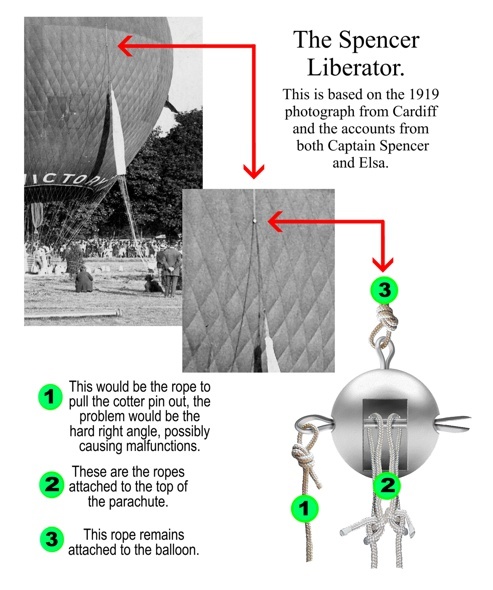
There is no actual close up photo of this device. If you look closely at the 1919 Cardiff photo you can just make out the liberator up above the apex of the chute.
Elsa does describe this in a newspaper article and from this photo and her description I have tried to create a reasonable idea of what it looked like and why it seemed to malfunction on a regular basis.
On one occasion Elsa, was parachuting with another lady whose parachute woud not "liberate", Elsa could have saved herself but heroically decided to stay with the less experienced woman and the two had to stay with the balloon until it landed in a tree many miles away.
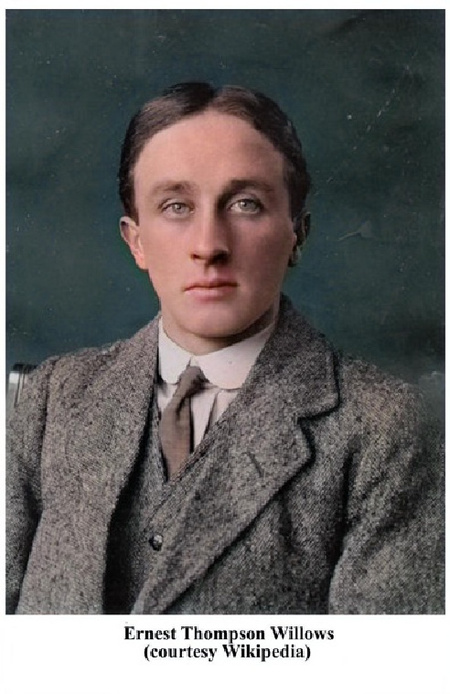
Ernest Thompson Willows.
Born in Cardiff, Wales in 1888. He trained originally as a dentist before becoming interested in ballooning and parachuting. Elsa worked with several people who were the greatest pioneers and innovators of their time.
Willows built a steerable balloon ( a dirigble) and was the first person to cross from Britain to France in 1910. He co invented with another Welshman what is arguably the greatest safety device of all time; that being the inlflateable raft. In June 1921, he demonstrated this device by dropping it from a plane into Swansea bay. For some strange reason he gave up his share of the patent on a device which is now to be found on every single aeroplane and boat in the world. Willows was a combination of genius inventor and innovator, who was constantly dogged with appalling bad luck. His economic woes forced him to offer balloon rides in an unsuitable balloon, on August 6th 1926, it plummeted to the ground killing himself and five passengers.
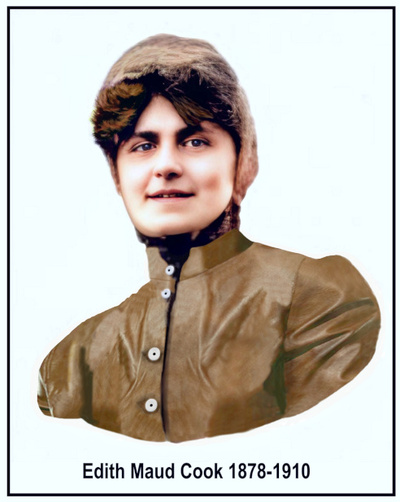
Edith Maud Cook.
Another remarkable woman that Elsa parachuted with on many occasions. Elsa's first descent in 1901 was under the direction of Edith who was then working under the name of VIOLA SPENCER. Born in 1878 in Ipswich, Cook ran away from home to be a parachutist.
Her greatest claim to fame is that she is acknowledged to be the first women in Britain to fly a plane and also regarded as the first woman in the world to fly a monoplane. Arguably, Cook could have gone on to become the greatest pioneer aviator in the world but tragically she died in a parachuting accident in 1910. Cook, was another unsung, and largely forgotten hero of early parachuting. Evidenced by the fact that she lay in an unmarked grave for over 100 years before and aviation group remembered her.
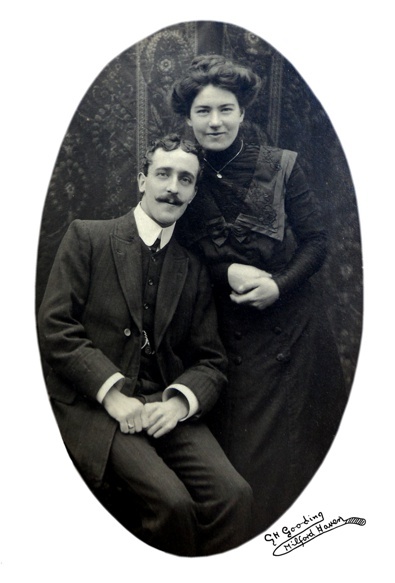
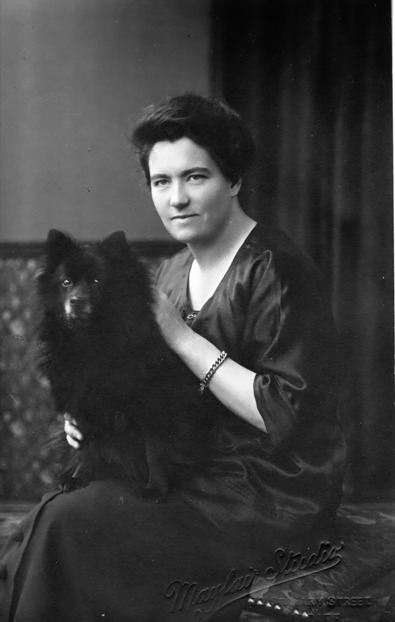
Elsa with George and Molly
These are two photos of Elsa's early life. The first with husband George when they were living in his hometown of Milford Haven, Wales.
The second with her other great love; her dog Molly. Elsa and George did not have any children, Sadly George died in 1934, possibly from complications from his service in the first world war. It was after this that Elsa moved a few feet North to the Dell house (Shown above)
In the Dell house, Elsa "adopted" the Dell's youngest daughter Diane. Diane and Elsa would be the best of friends right up to Elsa's death in 1964.
Also Elsa's parachuting exploits inspired the Dell's two sons David and Keith to join the British Airborne forces. David Dell, later became Elsa's biographer. This photo to the right is from Elsa's personal archive,



New text element
World's Lowest Parachute Descent?
Photo courtesy of James Bentley Archive
August 2nd. 1915, may have been the day that Elsa set up a world record for the lowest parachute descent. It is hard to accurately say at what height she started her descent and at what height her chute finally opened. safe to say it was somewhere between 100 and 60 feet. What we do know is that she landed right in front of the Corbett Hospital, (Pictured above) and her parachute was caught on one of the two poles that protrude up above the roof line.
The hospital, at that time was full of soldiers from the first World War, possibly from the second battle of Ypres, where the Germans used chlorine gas for the first time. These battle scarred soldiers most probably thought they had seen it all until a young lady parachutist, whose chute had barely opened, lands in a bed of Geraniums, right in front of them.
(read the newspaper article on the right for yourselves)
County Express, August 7, 1915.
“Rain—it was nearly all rain on
Monday— fell in torrents at half past five.
Nevertheless, Captain Spencer had completed
his arrangements, and punctually to time
the “Silver King” rose swiftly, almost
perpendicularly when the weight of the two
parachutists came upon the ropes.
It soared for about 80 feet and then, due to the weight of rain, it travelled almost horizontally
towards the front of the hospital, rising. but
slowly. Before the lookers up contemplated
Miss Spencer had been released, the height
being probably little more than 100 feet.
She “slid down “60 feet or more before
the current of air opened the canvas and
completed the rest of the “ journey” at such
a rapid pace that many feared for her safety.
She came to earth in the geranium beds"
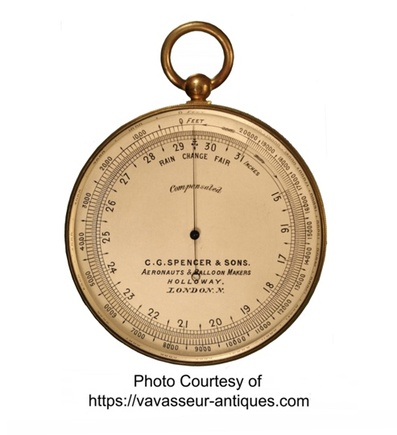
Did they know how high they were?
The simple answer is Yes. Thanks to a pocket sized barometer. The one pictured to the left was made for C.G. Spencer & Sons, the foremost balloon and parachute manufacturers in the late 1800's and early 1900's. These barometers are basically the same devices that most people have hanging in their hallways. They measure air pressure and from that you can calculate height.
These were small enough to be carried in your pocket and were certainly the most technical item that any serious balloonist or parachutist would deem to be absolutely necessary.


Two final pictures.
The picture at top left is the unmarked grave of Elsa's greatest supporter; her husband George.
He lies in Cathays Cemetery, Cardiff in this unmarked grave. Why he does not have a headstone we can only guess, perhaps Elsa was in dire financial straits after his death and couldn't afford one. Even Elsa does not have a memorial stone. She donated her body for medical science and one year after her death she was cremated and her ashes were spread to the wind. This memorial (upper right) to ALL persons who donated their remains is all that marks the passing of one of Britain's greatest pioneer parachutists.